As I continue planning the next year, one question keeps popping up: Why do we have denominations? Why Baptist, Presbyterian, Methodist churches? And why the divisions within them? Southern Baptist, Cooperative Baptist, National Baptist, PCUSA, PCA, United Methodist, Evangelical Methodist, African Methodist Episcopal, and on and on. If you are not a member of one of these churches, you probably have not heard of half of these. It’s kind of like how you only know the difference between Death Cab for Cutie and Postal Service if you wear skinny jeans and vintage non-prescription glasses (I’m looking at you, Belmont).
A lot of it is historical. Back in the day, denominations sprang up like cicadas in a Nashville summer, mostly based on theological disagreements. How much free will we have; whether or not God knows ahead of time what is going to happen; or whether all Christians have equal ability to interpret scripture. In other words, a lot of old dead theologians getting in tiffs about this and that.
Recent splits are often political or racial. The Cooperative Baptist Fellowship, for instance, 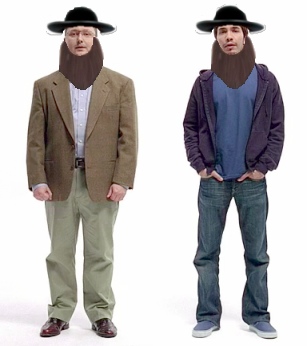 branched off from the Southern Baptists in the early 90s mostly because they wanted to ordain women. The Presbyterian Church (USA) and Presbyterian Church in America divided for similar reasons – we saw a result of that just a few weeks agowhen the PC(USA) decided to ordain gays and lesbians. For an altogether different reason, the predominantly black churches emerged out of the civil rights movement and a desire to serve the particular needs of African Americans. I still don’t know what the difference is between Mennonites and the Amish, but I think one is a Mac and the other’s a PC.
The history is all very fascinating, but I am trying to figure out what their purpose is today. Why do we, as individuals, join this or that church? In a lot of ways, it has become less about what the churches believe and more about how much fun you have at church on Sundays. Does your friend from school go to that church? Do they play that new, hip music you like so much? Are there free donuts?
It all seems very consumer oriented, doesn’t it? We are now picking churches like we pick soft drinks and cars. In fact, I can’t tell you how many times I’ve heard people say they are ‘shopping around’ for churches. I really don’t think it’s a bad thing; it just…is.
And the churches aren’t causing it, either. A big part of it is probably just a free-market American tendency to see everything in terms of personal choice. We are born and bred to be consumers, and by God we are good at it. Maybe the other part is some innate need to distinguish ourselves from everyone else. Humans aren’t happy unless we can find a reason to be different from (better than?) our neighbors.
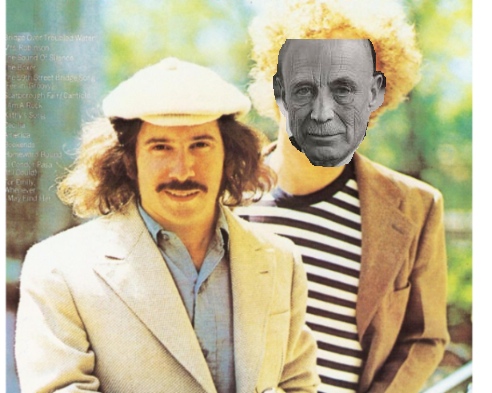 One of those old dead theologians, Reinhold Niebuhr, had a lesser-known brother named Richard. You could say Richard was the Art Garfunkel of the pair. Regardless, he said that denominational divisions marked a failure of Christians to make their message the central cultural agent it should be. Instead of spreading the Gospel, American Christians were spreading petty disputes and infighting. Is that true, or do denominations provide a necessary element of choice? Or are denominations a helpful form of specialization, each bringing their own particular contribution to the same larger goal?
Maybe it doesn’t matter. As the popular Christian author, Rob Bell, writes, “Just read the story, because a good story has a powerful way of rescuing us from abstract theological discussions that can tie us up in knots for years.”
 Life Reconciling